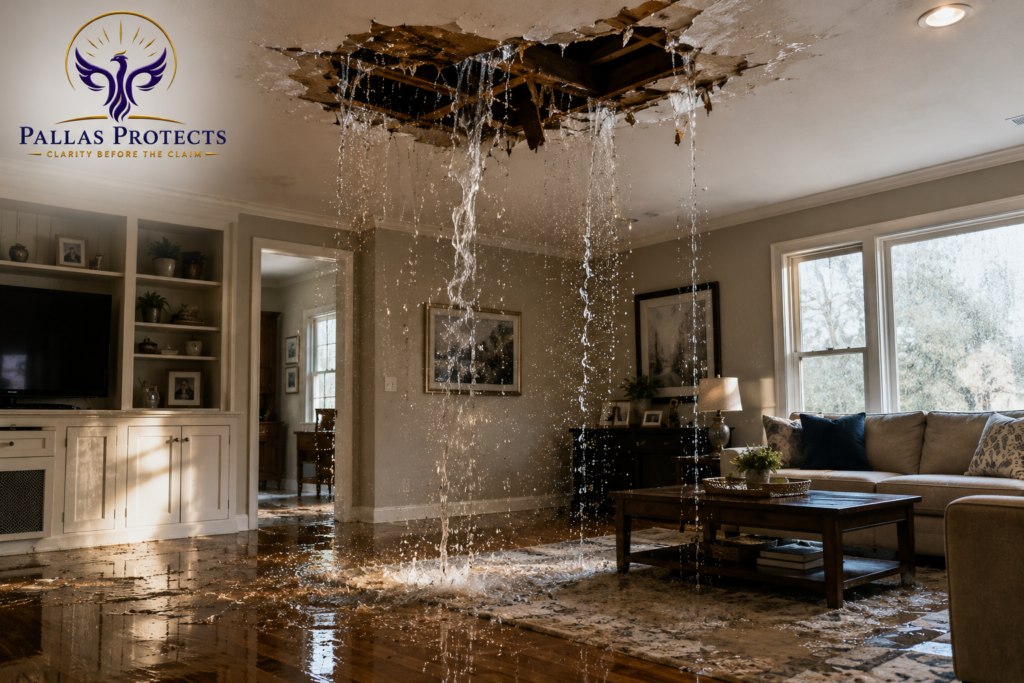

Water damage is one of the most common sources of confusion in homeowners insurance. The good news is that many water-related losses are covered. The bad news is that not all water damage is treated the same way.
In general, homeowners insurance is designed to cover sudden and accidental water damage. Damage that develops over time due to wear, neglect, or maintenance issues is usually not covered.
Water Damage That Is Usually Covered
Most standard homeowners policies generally cover water damage caused by a sudden and accidental event.
Examples often include:
- Burst or frozen pipes
- Broken appliance hoses
- Overflowing washing machines
- Sudden plumbing failures
- Accidental discharge from a water heater
- Water damage caused while firefighters are extinguishing a fire
In these situations, insurance generally helps pay for damage to the home and personal property caused by the escaping water.
Water Damage That Is Usually Not Covered
One of the biggest surprises for homeowners is that insurance is not a maintenance plan.
Most policies generally do not cover:
- Long-term leaks
- Ongoing plumbing issues
- Gradual water intrusion
- Rot caused by unresolved moisture
- Water damage resulting from poor maintenance
If a small leak exists for months or years before being addressed, there is a good chance the resulting damage will be excluded.
Is Sewer Backup Covered?
Usually not under a standard homeowners policy.
If a sewer line backs up into the home or a sump pump fails, the resulting damage is often excluded unless the homeowner has added Water Backup Coverage.
This endorsement is generally inexpensive and can be one of the most valuable optional coverages available to homeowners.
Is Flood Damage Covered?
No.
Flood damage is one of the most commonly misunderstood insurance topics.
Water entering the home from outside sources—such as overflowing rivers, storm surge, or surface water—is generally excluded from standard homeowners insurance.
Flood protection typically requires a separate flood insurance policy.
What About a Leaking Roof?
The answer depends on the cause.
If a windstorm damages the roof and water enters the home immediately afterward, the resulting interior damage may be covered.
If the roof has simply deteriorated over time and eventually leaks due to age or lack of maintenance, coverage is unlikely.
Is Mold Covered?
Sometimes.
If mold develops because of a covered water loss, such as a burst pipe, there may be coverage available.
If mold develops because of a long-term leak, neglected maintenance issue, or flooding, coverage is often limited or excluded.
Final Thoughts
Water damage claims often come down to one key question: was the damage sudden and accidental, or did it develop over time?
Most standard homeowners policies are designed to help when an unexpected event causes water damage. Long-term leaks, maintenance issues, flooding, and sewer backups are often treated differently and may require separate coverage.
Understanding those differences before a loss occurs can help prevent surprises and make it easier to choose the coverage that fits your home and situation.