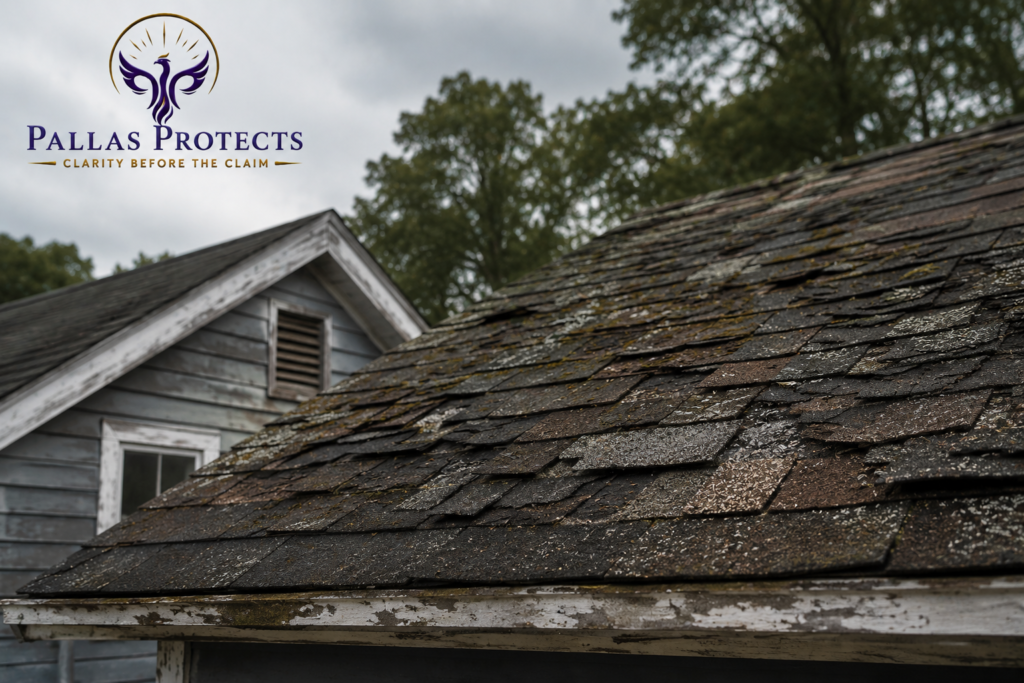

How roof age affects home insurance coverage and cost can have a major impact on insurance eligibility, coverage options, and premium cost. Many homeowners do not realize how important roof age becomes when shopping for coverage.
In recent years, insurance companies have become increasingly selective about roof condition and age. A roof that would have been acceptable ten years ago may receive additional scrutiny today.
Understanding why roof age matters can help homeowners avoid surprises when shopping for insurance or renewing an existing policy.
Why Insurance Companies Pay Close Attention to Roofs
From an insurer’s perspective, the roof is one of the most important parts of a home.
A damaged roof can lead to expensive claims involving water intrusion, mold, interior damage, insulation, flooring, drywall, and personal property. Because of this, insurers often view roof condition as a key indicator of overall risk.
As roofs age, the likelihood of wear, deterioration, and weather-related damage generally increases.
Does Roof Age Affect Insurance Premiums?
Often, yes.
While every insurance company has its own underwriting guidelines, newer roofs are generally viewed more favorably than older roofs.
A recently replaced roof may qualify for better pricing with some carriers, while an aging roof may lead to higher premiums or fewer available options.
The impact varies depending on the roofing material, location of the home, and the insurer’s underwriting standards.
Can an Old Roof Make a Home Difficult to Insure?
In some cases, yes.
Many insurance companies have roof age guidelines that help determine whether a home is eligible for coverage.
Some carriers may request additional information or inspections once a roof reaches a certain age. Others may require proof that the roof remains in good condition.
If a roof shows significant wear, missing shingles, curling shingles, soft spots, moss growth, or other signs of deterioration, an insurer may decline coverage until repairs or replacement are completed.
Roof Age Is Not the Only Factor
Age matters, but condition often matters just as much.
A well-maintained roof may be viewed more favorably than a neglected roof of the same age.
Insurance companies may consider factors such as:
- Roof material
- Maintenance history
- Visible wear and tear
- Evidence of previous repairs
- Local weather exposure
- Inspection results
This is one reason homeowners are sometimes surprised when two homes with similar roof ages receive different underwriting decisions.
What Happens During a Home Inspection?
Some insurance companies inspect properties before or shortly after issuing a policy.
During an inspection, the roof is often one of the first areas reviewed.
Inspectors may look for:
- Missing or damaged shingles
- Moss or algae growth
- Sagging areas
- Exposed underlayment
- Evidence of leaks
- General condition and remaining life expectancy
If significant issues are discovered, the insurance company may request repairs or replacement to maintain coverage.
How Often Should a Roof Be Replaced?
There is no single answer because roofing materials have different life expectancies.
Factors such as climate, installation quality, maintenance, and storm exposure can all affect how long a roof lasts.
A roof that performs well in one climate may age differently in another.
For insurance purposes, both roof age and roof condition matter. A well-maintained older roof may be viewed differently than an older roof showing signs of deterioration.
Final Thoughts
Roof age plays a larger role in homeowners insurance than many people realize.
It can affect eligibility, pricing, inspections, and even the number of insurance companies willing to offer coverage.
Whether your roof is five years old or twenty-five years old, understanding both its age and condition can help you avoid insurance surprises and make better decisions before a problem arises.
Next Article: Water Damage: What Home Insurance Covers and Doesn’t Cover